/news/ai-driven-bug-reports-overwhelm-open-source-maintainers-like-a-denial-of-service-1cf1345c
AI-Driven Bug Reports Overwhelm Open-Source Maintainers Like a Denial of Service Attack
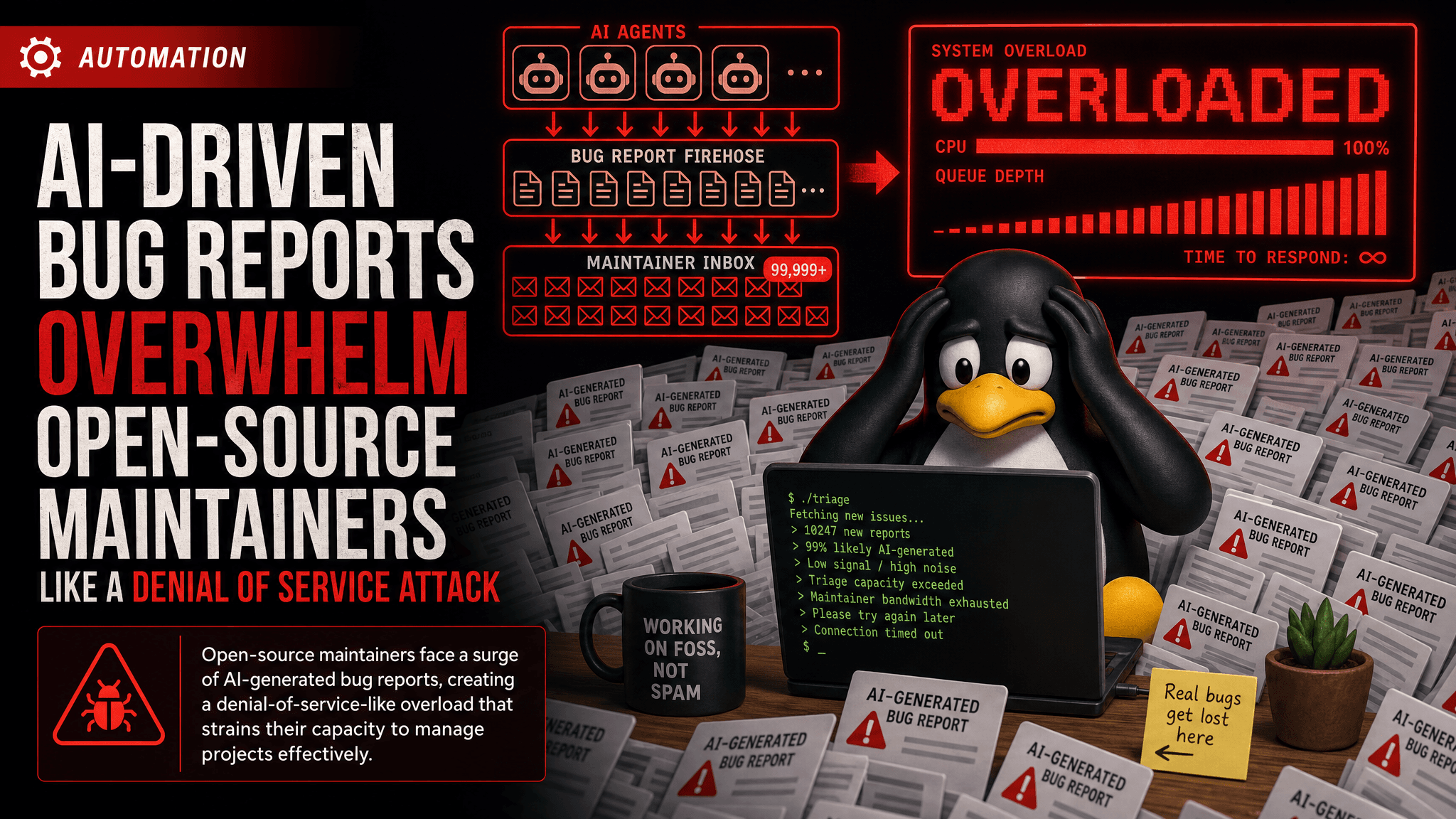
Open-source maintainers face a surge of AI-generated bug reports, creating a denial-of-service-like overload that strains their capacity to manage projects effectively.
Open-source software maintainers are increasingly burdened by a flood of bug reports generated by AI and large language model (LLM) tools. This phenomenon, described recently by Phoronix, likens the surge to a denial of service (DoS) attack on maintainers — not in the traditional cybersecurity sense, but in terms of overwhelming their ability to triage and address issues.
The Nature of the Problem
AI and LLM agents are being integrated into developer workflows to automate code review, bug detection, and issue reporting. While this automation can accelerate identifying potential problems, it also results in a high volume of bug reports, many of which are low quality, redundant, or irrelevant. Maintainers of open-source projects, often volunteers or small teams, find themselves inundated with these AI-generated tickets.
This overload creates a bottleneck. Maintainers must sift through a flood of reports to find genuine issues, which consumes valuable time and energy. The sheer volume can delay responses to real bugs and slow down the development process. In extreme cases, maintainers may become demotivated or unable to keep up, threatening the sustainability of the projects.
Why This Is Different From Traditional Bug Reports
Human-generated bug reports typically come with context, prioritization, and a level of discernment about what constitutes a real issue. AI-generated reports, however, often lack this nuance. They may flag false positives or issues that are not actionable. The automated nature means these reports can arrive en masse, without the filtering or triage a human reporter might apply.
Additionally, some AI tools generate bug reports based on heuristic or pattern matching rather than deep understanding, increasing noise. This contrasts with the more deliberate and focused bug reporting process historically seen in open-source communities.
Implications for Open-Source Projects
The influx of AI-driven bug reports forces maintainers to rethink their workflows. Some possible responses include:
- Implementing stricter submission guidelines or automated filtering to reduce noise.
- Prioritizing human triage to validate AI-generated reports before they reach maintainers.
- Developing better AI tools that improve precision and reduce false positives.
- Encouraging community moderation to help manage the volume.
Without such measures, maintainers risk burnout and project stagnation. The open-source ecosystem depends heavily on maintainers’ goodwill and capacity, so this new challenge could have ripple effects across software that underpins much of the technology stack.
What This Means in Practice
For engineers and teams relying on open-source software, this trend signals a need for more thoughtful integration of AI tools. Blindly trusting AI-generated bug reports without human oversight can degrade project health. Conversely, investing in smarter AI tooling and community processes can harness AI’s benefits without overwhelming maintainers.
Maintainers themselves may need to advocate for resources or tools to manage this new workload. Organizations that depend on critical open-source projects might consider contributing to maintenance efforts or funding infrastructure to help handle AI-driven noise.
In summary, while AI and LLMs offer powerful automation capabilities, their current impact on open-source bug reporting is a cautionary tale. Balancing automation with human judgment remains essential to sustaining healthy, responsive open-source projects.
Comments
Sign in or create an account to leave a comment.
0 comments
No comments yet.