/news/anthropic-s-claude-and-cowork-now-share-user-memories-by-default-raising-privacy-d7fcc283
Anthropic’s Claude and Cowork Now Share User Memories by Default, Raising Privacy Concerns
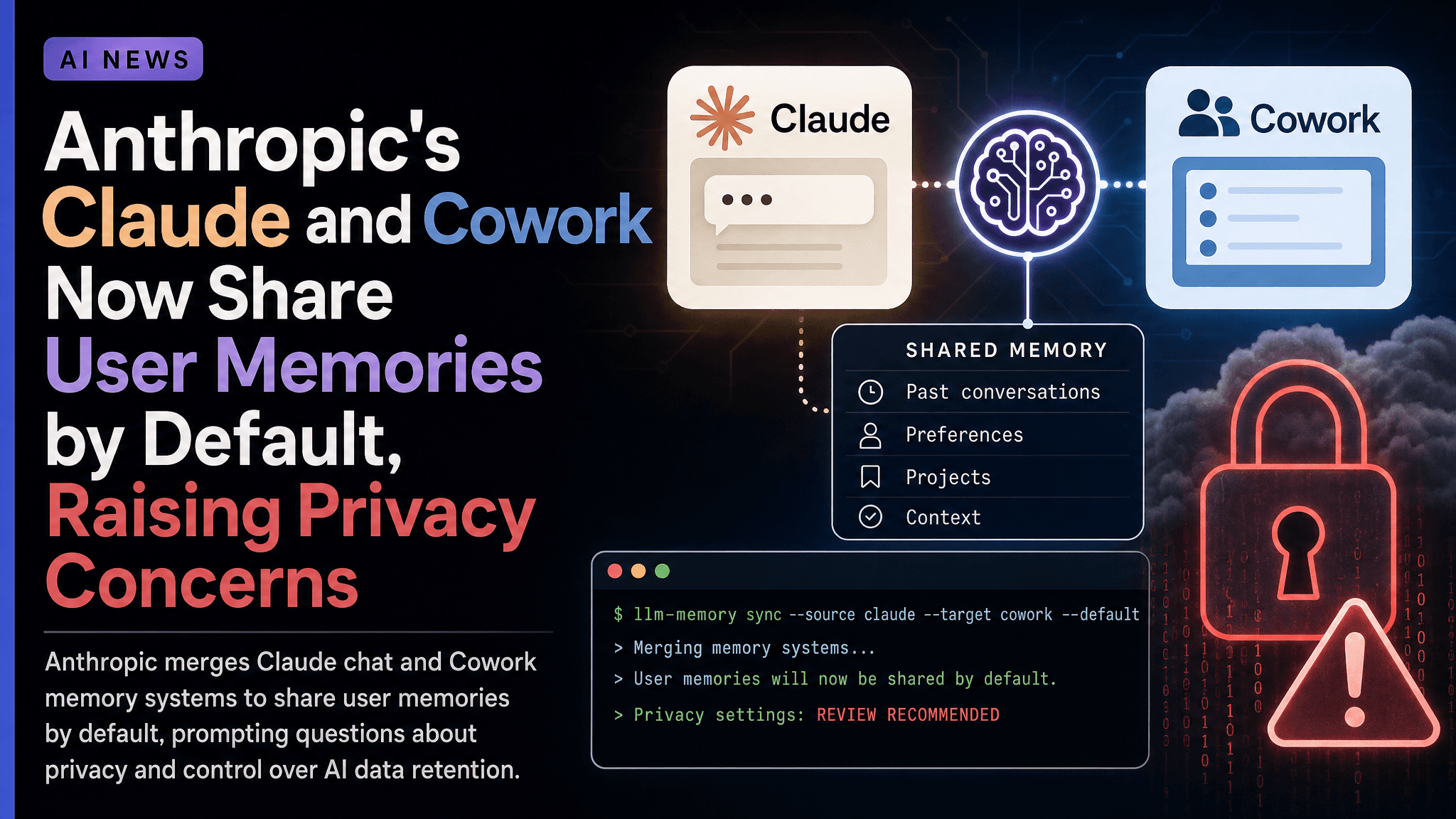
Anthropic merges Claude chat and Cowork memory systems to share user memories by default, prompting questions about privacy and control over AI data retention.
Anthropic, the AI research company behind the Claude chatbot, has integrated its Claude chat system with Cowork, its memory platform, to enable sharing of user memories by default. This means that unless users actively opt out, their interactions and remembered context will be accessible across these AI tools.
What’s Changing?
Previously, Claude and Cowork operated with separate memory scopes, limiting how much context the AI could retain and share between sessions or applications. Now, by merging these memory systems, Anthropic aims to provide a more seamless and contextually aware AI experience. For example, information you share in Claude can be recalled later in Cowork without needing to repeat yourself.
However, this convenience comes with tradeoffs. The default opt-in approach means many users might unknowingly allow their data to be stored and shared across AI tools. This raises important privacy questions about what data is retained, how it is used, and how easily users can control or delete their memories.
Privacy and Control Concerns
ZDNet’s report highlights that this move has sparked debate around user consent and transparency. Unlike some AI services that require explicit consent to retain data, Anthropic’s default sharing model shifts the burden onto users to opt out if they want to keep their interactions private.
From a practical standpoint, this could lead to unintended data exposure, especially in professional or sensitive contexts where users might not realize their conversations are being stored and shared. It also raises questions about data security, retention policies, and compliance with privacy regulations.
Why Does This Matter to Engineers?
For Linux, automation, cloud, and AI engineers relying on AI assistants for coding, debugging, or managing infrastructure, memory sharing can be a double-edged sword. On one hand, persistent memory can improve productivity by remembering project details, preferences, or prior issues without re-explaining context every time.
On the other hand, engineers often handle proprietary or sensitive information. Default memory sharing without clear, easy opt-out mechanisms could inadvertently expose confidential data or intellectual property. It’s crucial for engineers to understand the privacy settings of their AI tools and advocate for transparent data handling practices.
What’s Next?
Anthropic’s integration reflects a broader trend in AI development: balancing enhanced user experience through persistent memory with the imperative to protect user privacy. Users should carefully review privacy policies and settings, and companies must prioritize clear communication and easy controls.
For now, if you use Claude or Cowork, check your settings to opt out of memory sharing if you prefer tighter control over your data. As AI tools become more embedded in workflows, understanding these tradeoffs will be essential for practical, secure adoption.
In summary, Anthropic’s merging of Claude and Cowork memories by default offers improved continuity but shifts privacy responsibility onto users. Engineers should weigh convenience against confidentiality and stay informed about their AI tools’ data practices.
Comments
Sign in or create an account to leave a comment.
0 comments
No comments yet.