/news/linux-7-3-brings-dramatic-btrfs-performance-improvements-with-up-to-5x-gains-74fc2763
Linux 7.3 Brings Dramatic Btrfs Performance Improvements with Up to 5x Gains
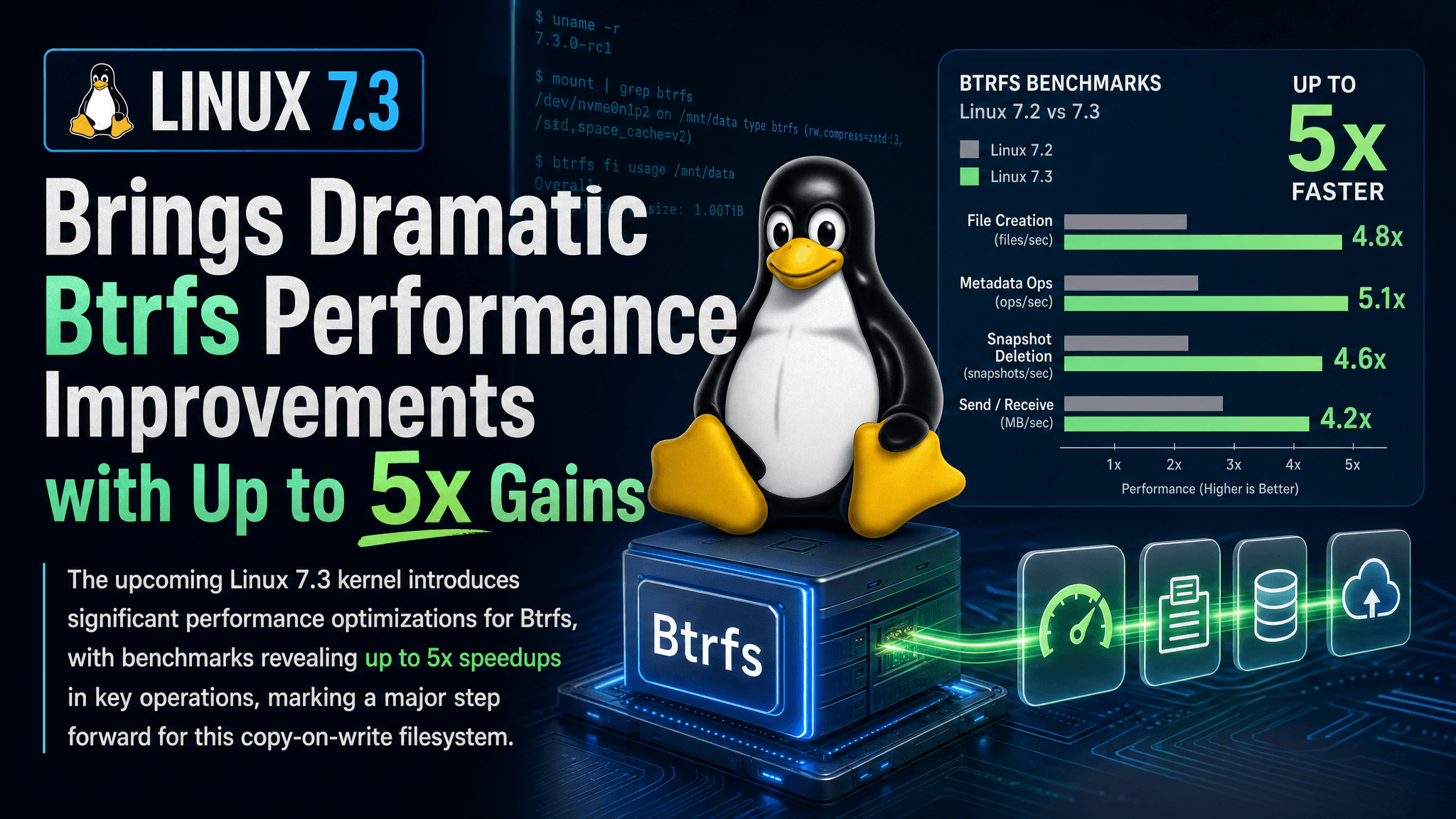
The upcoming Linux 7.3 kernel introduces significant performance optimizations for Btrfs, with benchmarks revealing up to 5x speedups in key operations, marking a major step forward for this copy-on-write filesystem.
Introduction
Btrfs, the advanced copy-on-write filesystem for Linux, is set to receive a substantial performance boost in the forthcoming Linux 7.3 kernel. According to recent benchmarking by Phoronix, the latest Btrfs updates deliver remarkable speed improvements, with some operations running three to five times faster than before. For engineers and sysadmins relying on Btrfs for data integrity and flexible storage management, these enhancements could translate into real-world efficiency gains.
What’s New in Btrfs for Linux 7.3?
The Btrfs pull request for Linux 7.3 includes a variety of performance optimizations targeting metadata handling, extent allocation, and transaction commit paths. While the patch details are technical, the core idea is to reduce overhead and improve parallelism in common filesystem operations. This includes better locking mechanisms and refined algorithms for managing filesystem trees.
Phoronix’s benchmarks highlight some standout improvements:
- Metadata-intensive workloads: Operations like file creation and deletion see up to 3x speedups.
- Write-heavy scenarios: Sequential and random writes benefit from more efficient extent allocation, with up to 5x faster completion times in certain tests.
- Sync and commit operations: The time to commit transactions to disk has been reduced, improving overall responsiveness.
These gains are not just theoretical; they were measured on real hardware using typical workloads, making them relevant for production environments.
Why These Gains Matter
Btrfs has long been praised for its features—checksumming, snapshots, subvolumes, and built-in RAID capabilities—but it has sometimes lagged behind other filesystems like ext4 or XFS in raw performance. These improvements help close that gap, making Btrfs more competitive for workloads where speed and data integrity are both priorities.
For example, developers working with container images, virtual machine disk files, or large datasets can expect faster file operations and reduced latency. Systems that rely heavily on snapshots and frequent metadata updates will also benefit from the optimized commit paths.
Tradeoffs and Considerations
While the performance jumps are impressive, it’s important to note that Btrfs’s complexity means that gains may vary depending on workload and hardware. Some edge cases might not see the same level of improvement, and stability testing is ongoing as Linux 7.3 is still in development.
Moreover, these optimizations do not change the fundamental design of Btrfs, so users should continue to monitor filesystem health and maintain backups, especially when upgrading kernels.
What This Means in Practice
For Linux users and administrators, the upcoming Linux 7.3 release promises a more performant Btrfs experience without sacrificing its advanced features. This could encourage broader adoption of Btrfs in environments where performance was previously a concern.
If you are running Btrfs in production, it’s worth planning to test Linux 7.3 on non-critical systems once it becomes available. Benchmark your specific workloads to gauge the benefits firsthand. For new deployments, Btrfs on Linux 7.3 might offer a compelling balance of speed, flexibility, and data protection.
Conclusion
The Linux 7.3 kernel’s Btrfs improvements represent a meaningful step forward for this filesystem. Achieving up to 5x performance gains in key areas demonstrates ongoing commitment from the kernel community to optimize and mature Btrfs. For practical Linux engineers focused on real-world impact, these enhancements will be worth watching as Linux 7.3 approaches stable release.
Comments
Sign in or create an account to leave a comment.
0 comments
No comments yet.